Australian software buyer's guide
Reference-checking software in Australia: 7 questions to ask before you choose
A practical evaluation framework for employers, recruitment agencies, talent acquisition and project hiring teams.
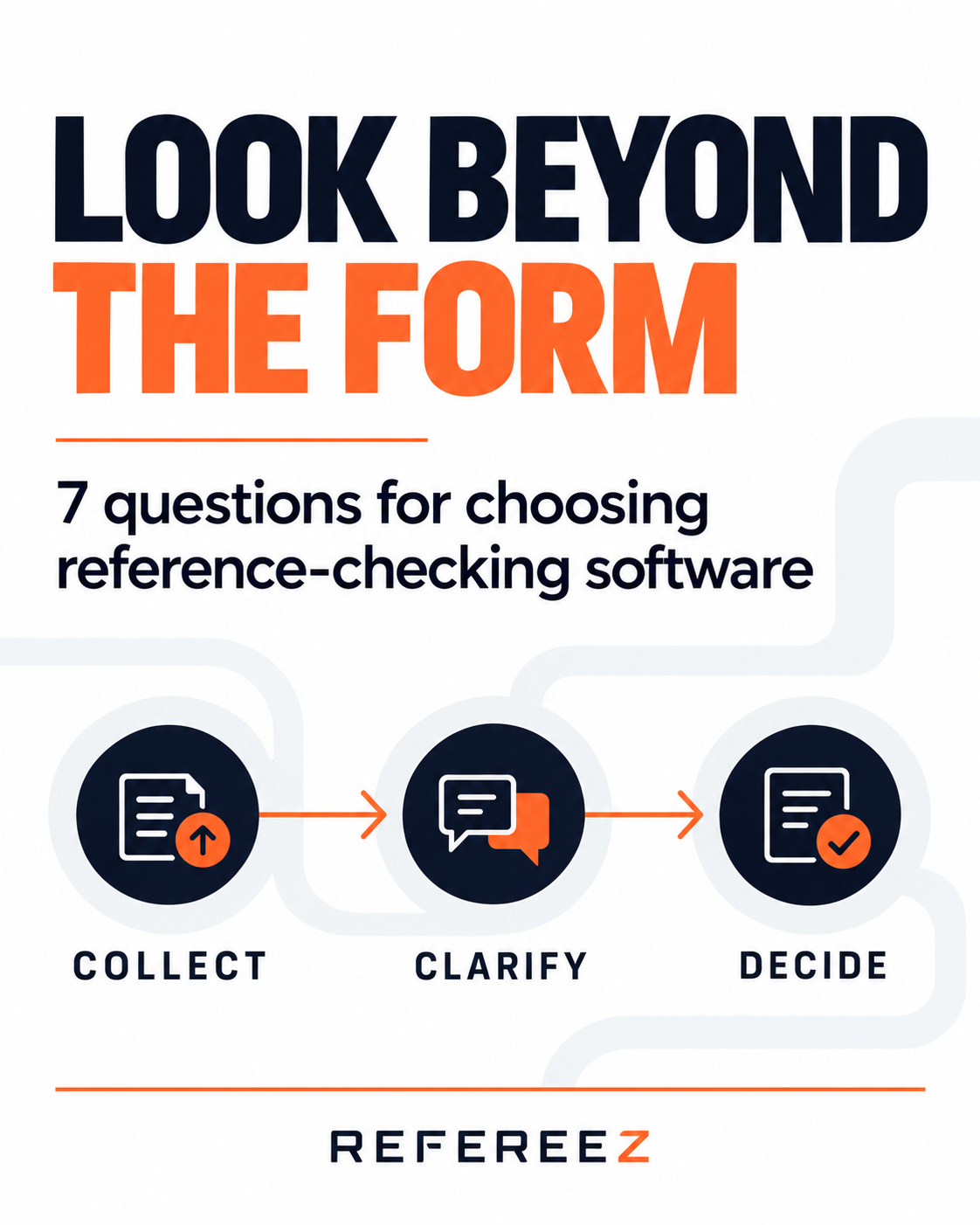
Most reference-checking software can collect answers. The stronger buying question is whether the whole process helps your team obtain, review and act on useful evidence.
A form may be easy to send, but the work around it still matters: referee participation, progress visibility, follow-up, report quality, privacy and the point where a human conversation adds context.
Use these seven questions when comparing reference-checking software in Australia.
1. What decision should the reference process support?
Start with the hiring outcome rather than the feature list. The right workflow depends on the role, the level of risk, the number of hires and the evidence your decision-makers need.
For one role, a structured digital reference check may provide the consistency and speed required. A senior, safety-sensitive or complex appointment may need additional clarification. A campaign or project cohort may place more weight on status visibility, repeatable question sets and clear ownership across the team.
Reference checking should support professional judgement. It should not make the hiring decision for you. Ask each provider to explain how its process helps your team review evidence, identify points that need attention and retain control of the final decision.
2. Can you choose the right mix of digital and phone reference checks?
Digital and phone reference checks solve different parts of the problem.
Structured digital checks can make questions consistent, give referees flexibility and help teams see progress. A recruiter-led phone conversation can be valuable when an answer needs context, a role carries additional complexity or a hiring manager wants to clarify a specific point.
The useful buying question is not which format is always better. It is whether the service lets you use each method where it fits. Ask how a digital check can move to phone follow-up, what triggers that decision, who conducts the conversation and how the additional context is recorded. Availability and timing for phone work should be confirmed against the agreed scope and referee availability.
3. What will candidates and referees experience?
Reference checking is a visible part of your hiring process. Candidates and referees should understand why they are being contacted, what they need to do and what happens next.
Review the actual invitation and completion experience, not only the buyer dashboard. Look for clear language, accessible steps, sensible reminders and a straightforward path for a referee who needs help. Ask how the provider handles incomplete submissions, outdated contact details and requests for clarification.
A considered experience supports trust and makes it easier for genuine referees to participate. It also reduces the avoidable follow-up created by unclear messages or confusing instructions.
4. Can your team see where work is stuck?
A reference-checking workflow becomes harder to manage when progress is hidden.
Your team should be able to see which invitations have been sent, which referees have responded, which checks remain outstanding and who owns the next action. That matters for an individual hire, and it becomes more important when several roles, sites or project cohorts are moving at once.
Ask the provider to demonstrate the status view using a realistic scenario. Check how reminders are handled, whether responsibilities are clear and how the workflow surfaces a delay without requiring the team to reconstruct the history from separate emails.
5. Does the final report help a hiring manager review evidence?
A completed form is not the same as a useful report.
The final output should help a hiring manager understand the referee context, review the responses and see where follow-up may be appropriate. Where ratings or review indicators are used, their meaning and limits should be clear. The report should remain a professional record of the evidence collected, not an automated hiring verdict.
Ask to see a sample report before you buy. Check whether the structure is easy to scan, whether written comments retain useful context and whether the output can be shared with the right internal stakeholders without unnecessary friction.
6. How are privacy, permissions and sensitive information handled?
Reference checks involve personal information, so privacy and access should be part of the buying conversation from the start.
Ask what notices candidates and referees receive, how consent and permissions are handled, who can access a report, how long information is retained and how sharing is controlled. Confirm which information is used for service delivery and which information, if any, is used for public website analytics.
Marketing measurement should remain separate from reference answers and report content. Avoid relying on broad claims. Request evidence that matches your organisation’s policy, risk settings and procurement requirements.
7. Will the service fit your hiring volume and workflow?
The right setup for an occasional hire may not suit a recruitment agency, labour hire team or project workforce.
Map the service against your actual process: expected hiring volume, number of users, deadlines, question sets, report expectations, escalation paths and the support available when a check needs attention. Ask what is standard, what can be configured and what requires a different service scope.
Price matters, but the cheapest per-check figure can be misleading if the workflow creates more manual chasing or produces an output your hiring managers cannot use. Compare the complete service, the effort required from your team and the fit with the decisions you need to make.
A practical demo checklist
During a demonstration, ask the provider to:
- show the invitation and referee experience;
- show status, ownership and reminder handling;
- explain how digital collection and phone follow-up work together;
- walk through a sample report;
- explain the purpose and limits of any review indicators;
- confirm user access, permissions and data-handling settings;
- test the workflow against your current volume and deadlines; and
- confirm the events and outputs your team will measure.
The best reference-checking software is not simply the fastest form. It is the service and workflow that gives your team clearer visibility, more consistent evidence and a report people can use.
Refereez combines structured digital reference checks, recruiter-led phone services and professional reports for Australian hiring teams. Book a practical demonstration to map your current workflow and see the relevant options.
See the workflow
Explore your options with Refereez
Book a practical demonstration to map your hiring process, walk through a sample report and discuss a suitable mix of digital and recruiter-led reference services.
Book a demo